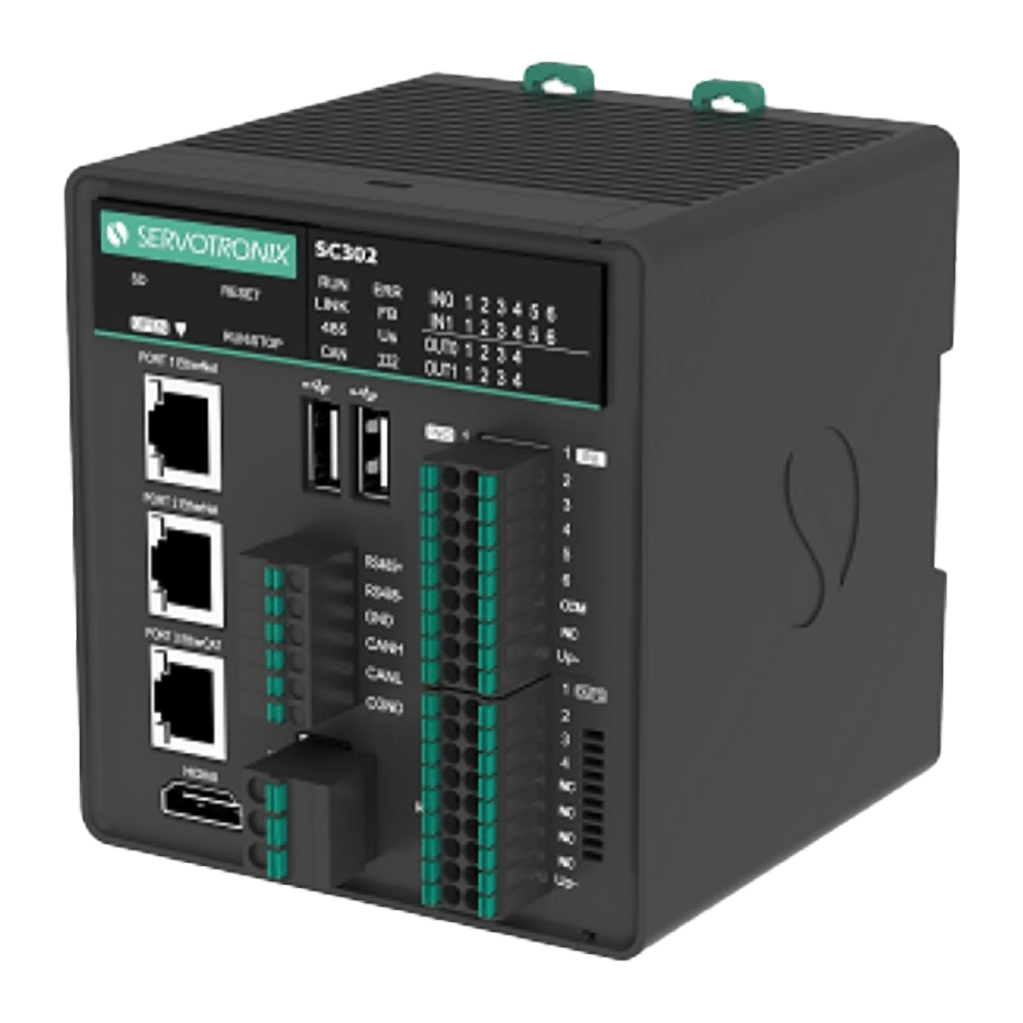
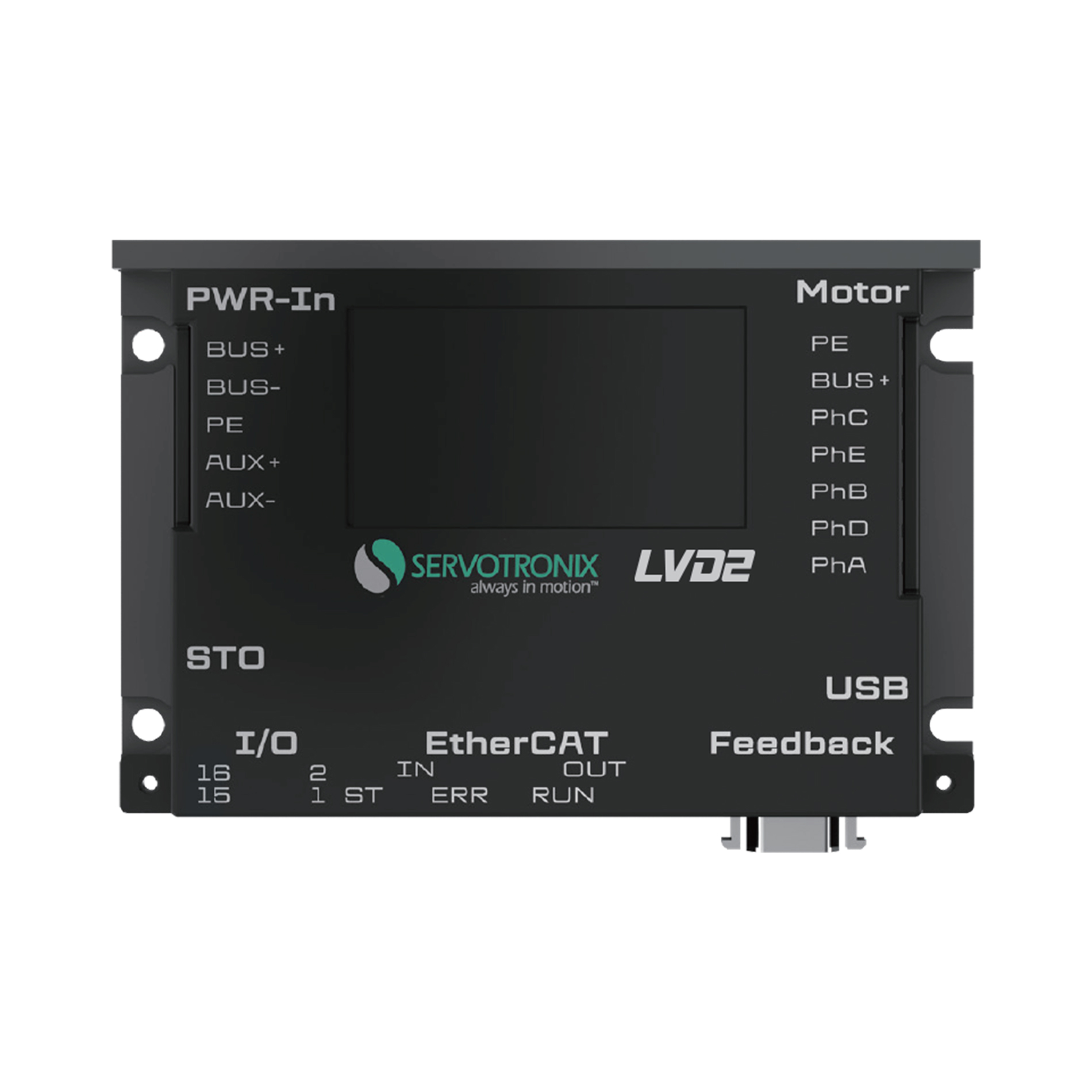
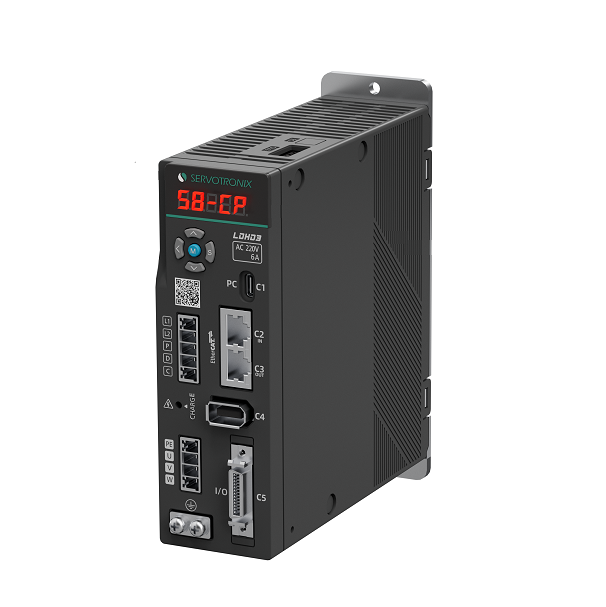
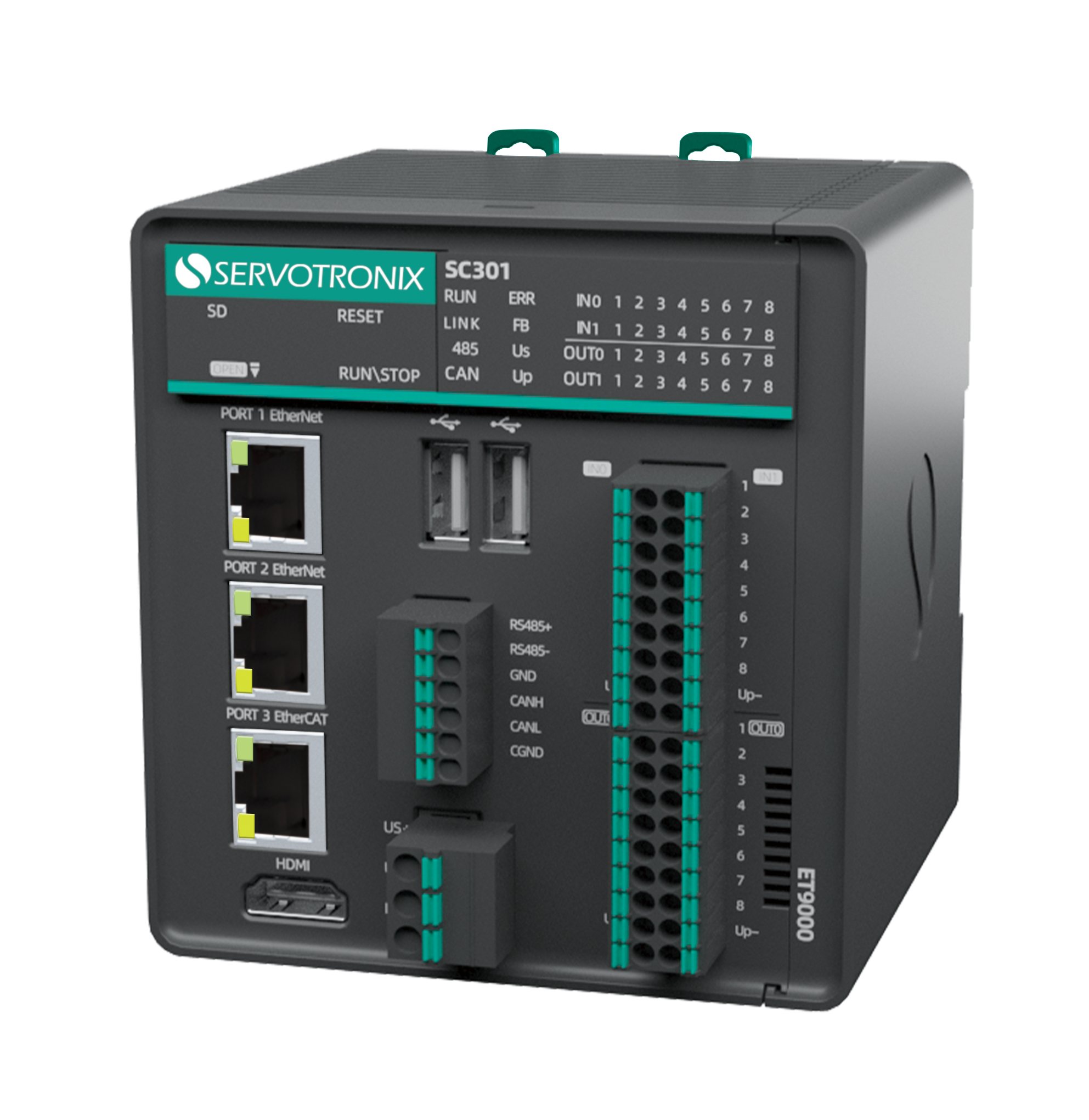
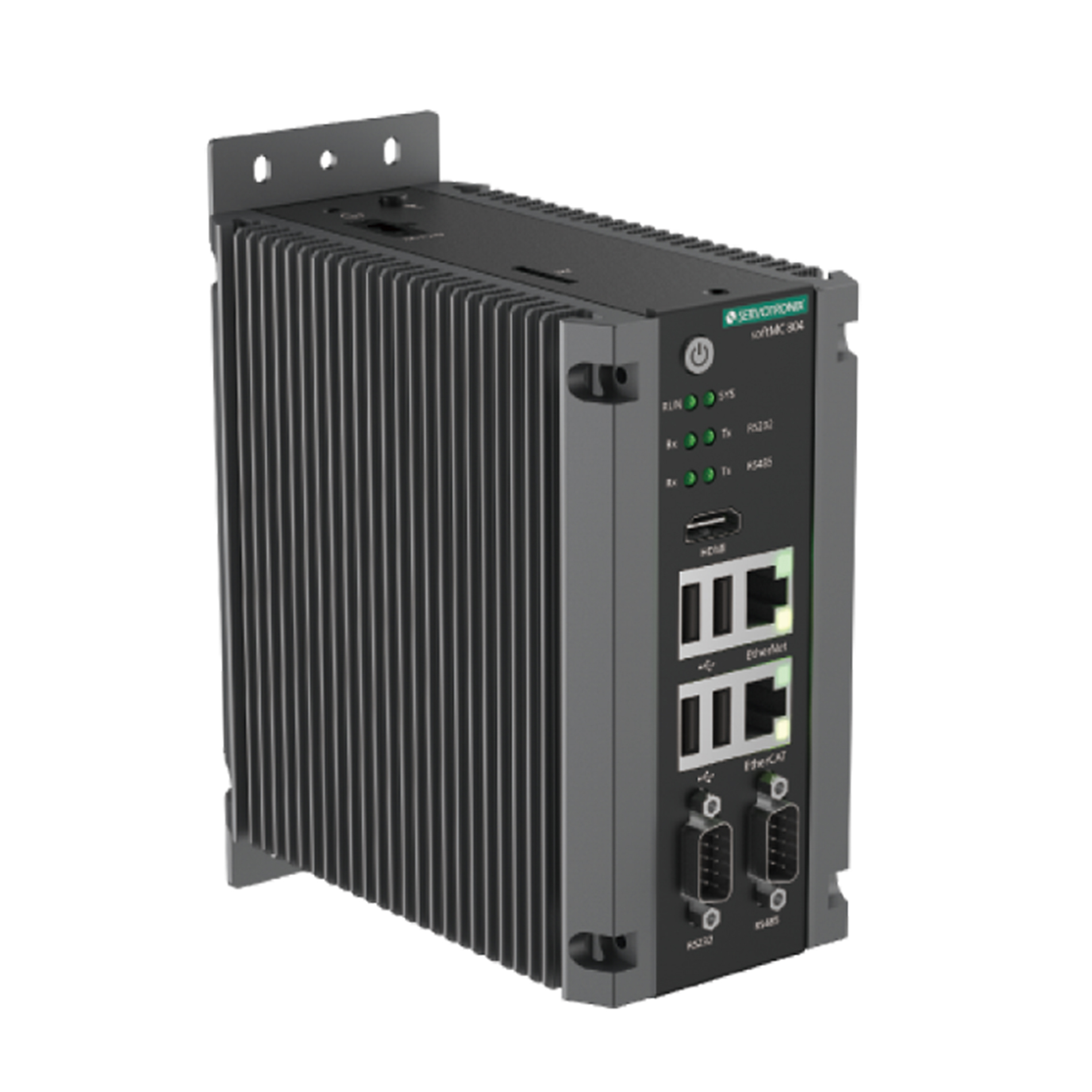
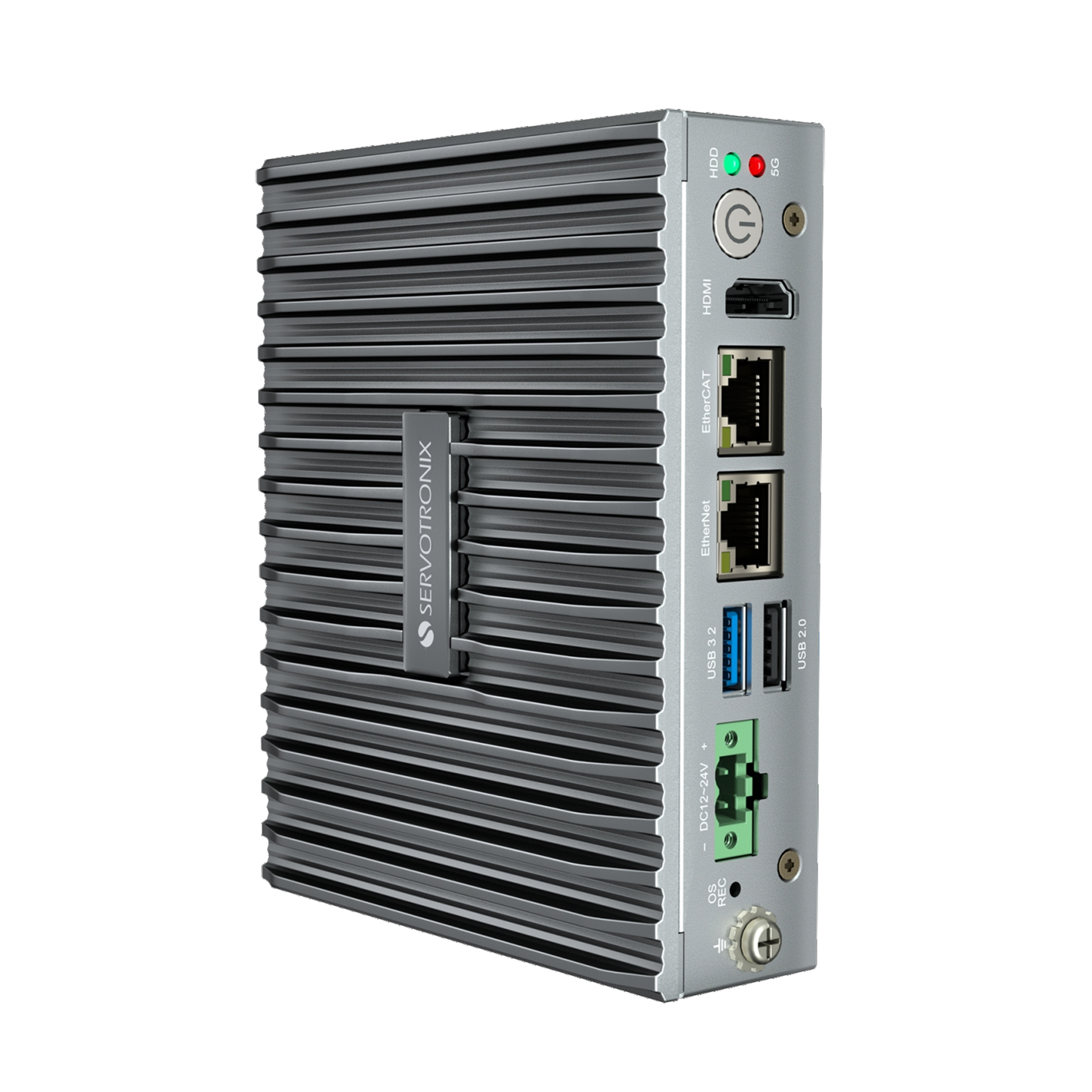
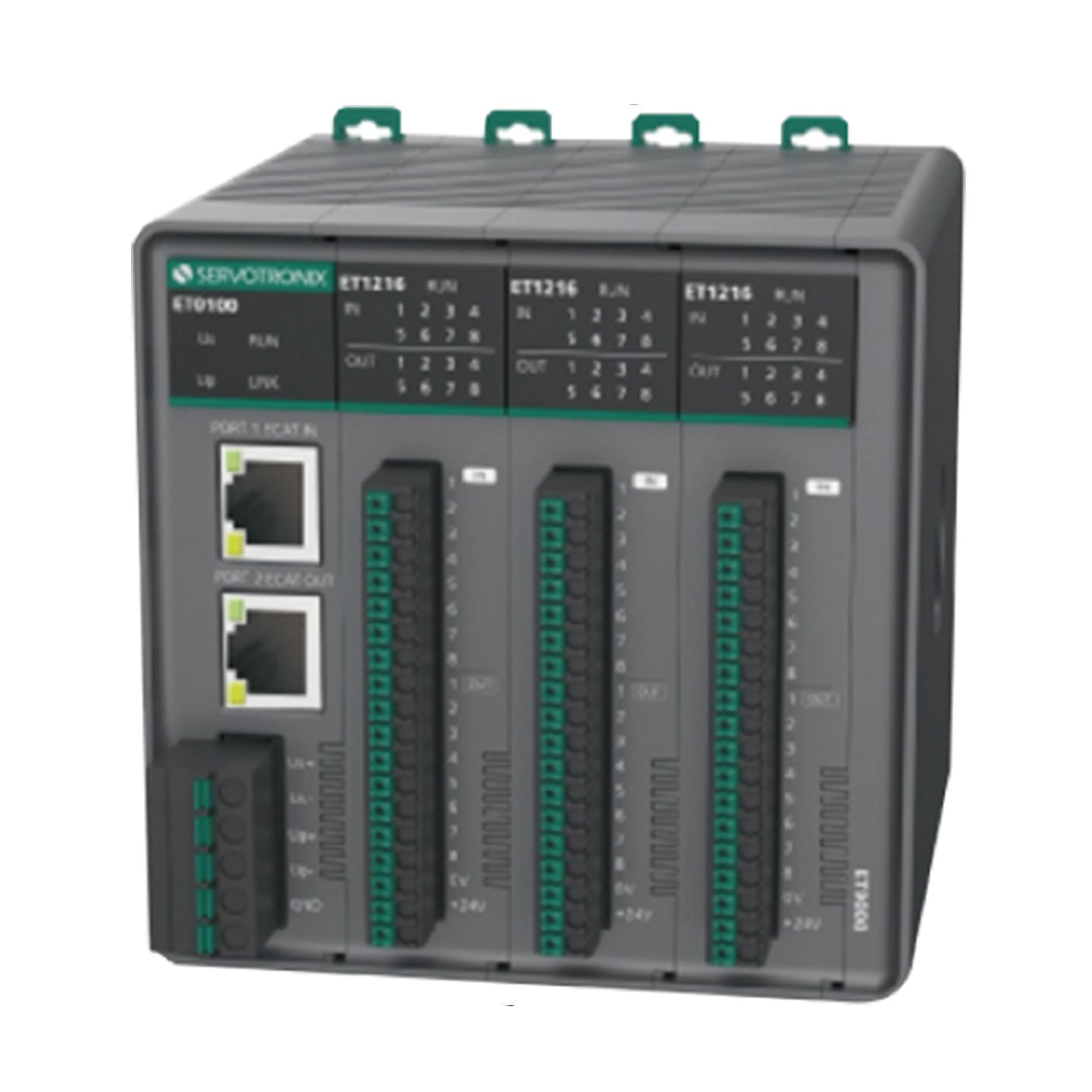
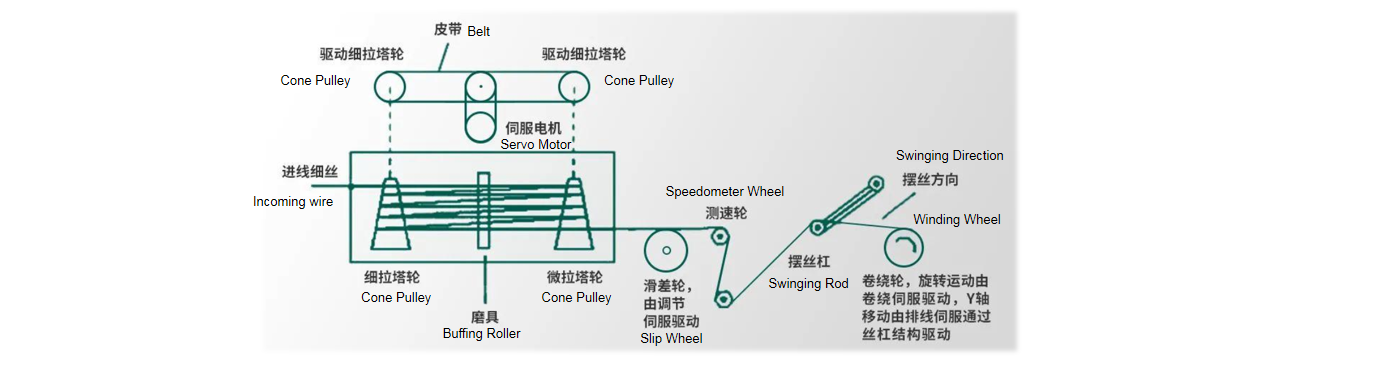
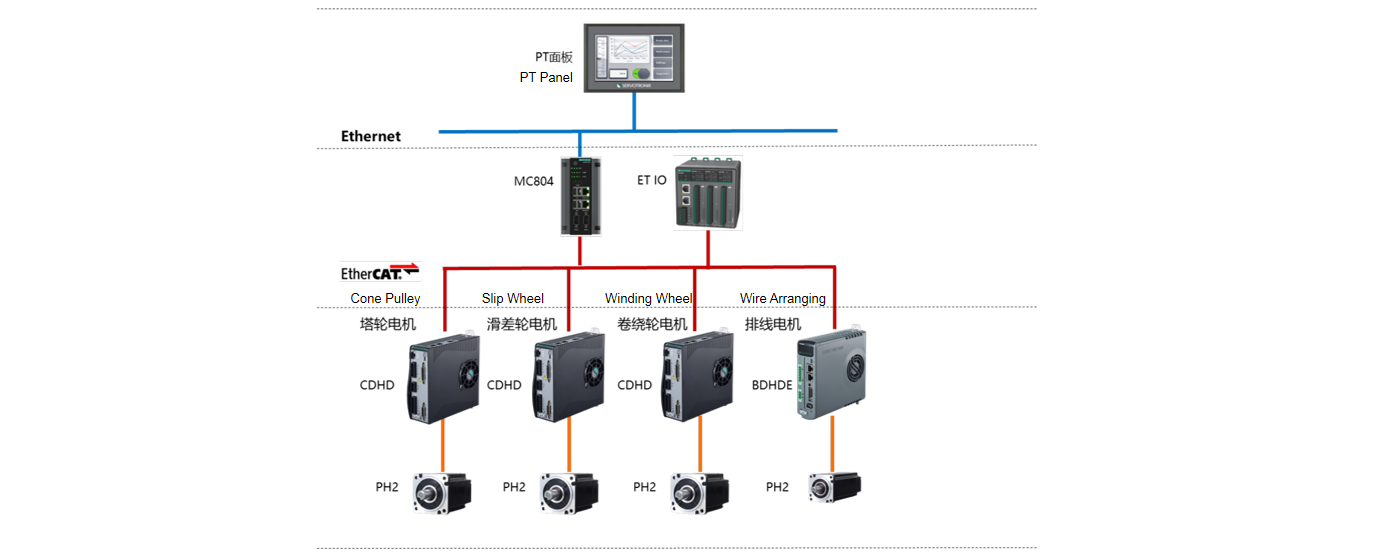
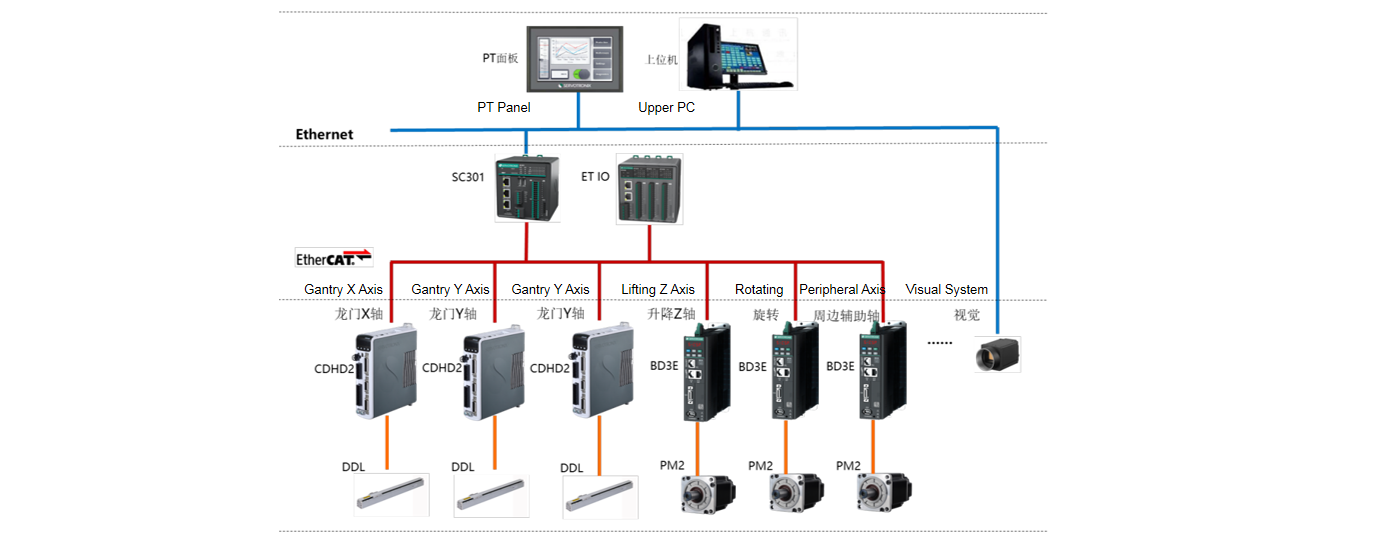
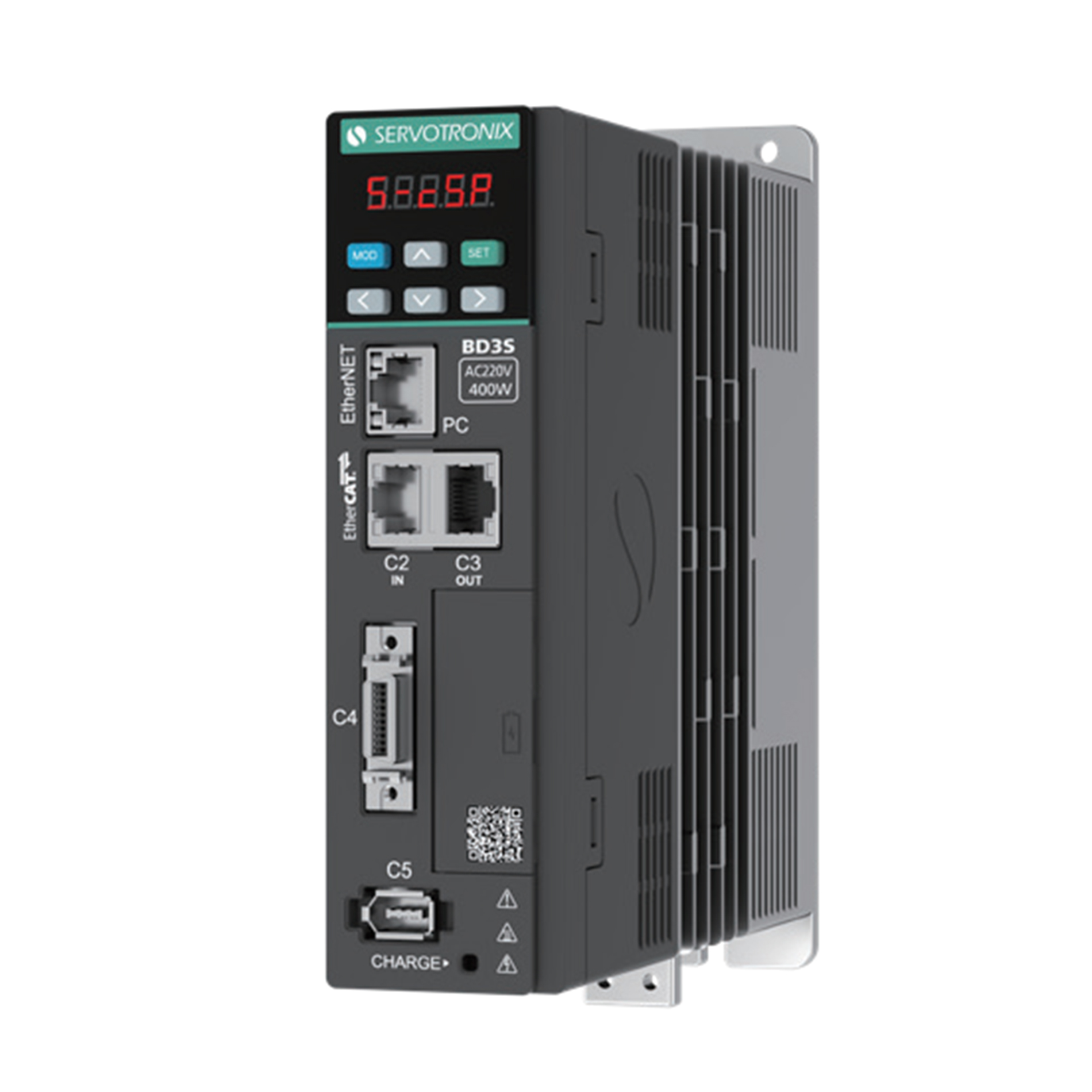
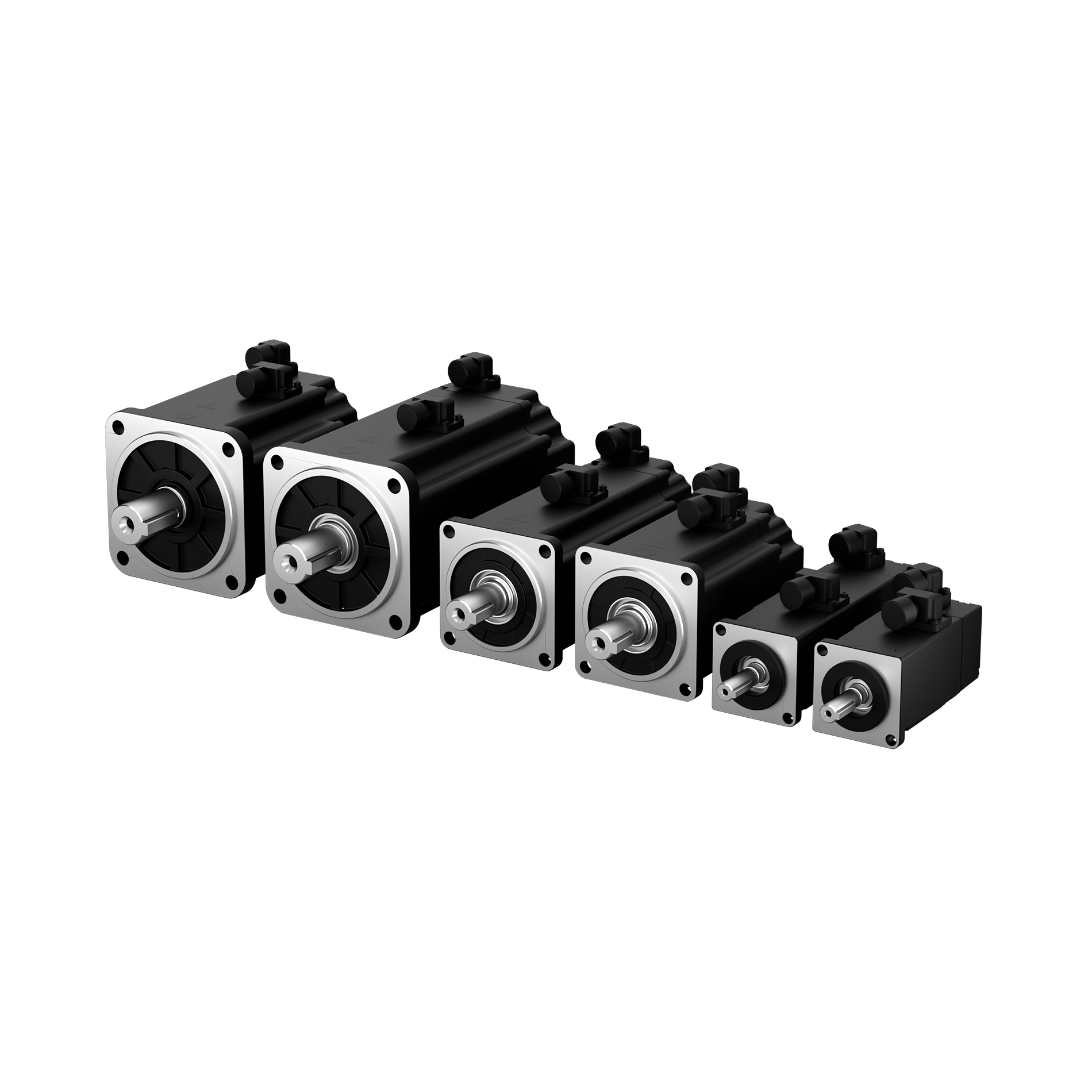
The alloy tungsten wire drawing machine consists of four core modules. Its servo drawing unit ensures stable tension for uniform wire forming. Induction or resistance heating quickly heats materials, and air/water cooling stabilizes wire structure and performance. The intelligent system optimizes key parameters in real time for higher efficiency and stable quality.
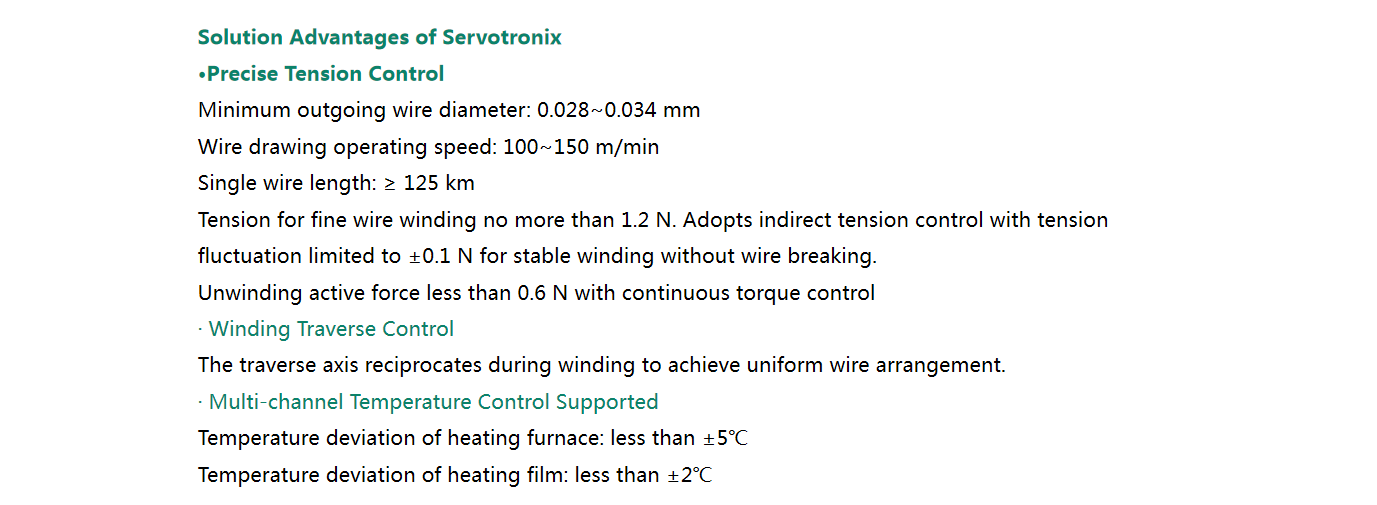
Equipped with built-in tension control algorithms, this solution meets the key performance requirements of the equipment as follows:
· Maximum breaking force of fine wire: 5N; maximum winding tension ≤ 2.1N
· Indirect tension control; tension fluctuation shall not exceed ±0.1N to ensure stable winding without wire breaking
· Unwinding active force less than 0.6N with continuous torque control mode
· Multi-channel temperature control: temperature deviation of heating furnace less than ±5℃; temperature deviation of heating film less than ±2℃


The PV string layup machine is core equipment for photovoltaic module automation production. It precisely and efficiently places welded solar cell strings on glass substrates or EVA films in preset arrangements. Bridging upstream welding and downstream lamination processes, its performance directly impacts module conversion efficiency, microcrack rate and long-term reliability.
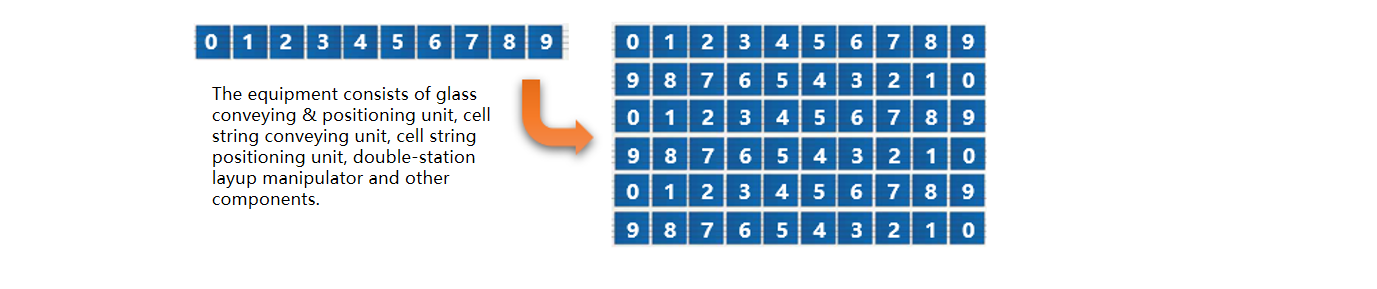
The cell strings welded by the stringer are automatically arranged into cell arrays via visual positioning in accordance with process dimensional requirements, layup orientation and sequence.
· Linear motors are adopted, delivering a maximum speed of 2 m/s (1 second faster in cycle time than traditional manipulators).
· Design cycle time: ≤30 s per piece for conventional modules; ≤53 s per piece for half-cut modules.
· String spacing accuracy: ±0.3 mm with mechanical positioning plus CCD vision (excluding inherent errors of cell strings).
· Distance tolerance between cells and glass edge: ±1 mm.
· Compatible module types: conventional 60-cell, 72-cell, half-cut, double-glass half-cut, MBB, shingled modules, etc., with one-click switching.