Abstract: Permanent magnet synchronous servo motor is a high-precision power equipment that uses permanent magnets as excitation sources to achieve efficient conversion of electrical and mechanical energy. With high power density, high efficiency, low loss, and excellent dynamic response performance, it has become a core executing component in industrial automation, new energy, high-end equipment and other fields. This article elaborates on the working principle, core structure, and technical advantages of permanent magnet synchronous servo motors, analyzes their application scenarios in various industries, and looks forward to future technological development trends, providing reference for technical applications and selection in related fields.
Against the backdrop of the acceleration of Industry 4.0 and intelligent manufacturing, high-end equipment has put forward higher requirements for the accuracy, efficiency, and reliability of power systems. Permanent magnet synchronous servo motors, with their unique technological advantages, have gradually replaced traditional asynchronous servo motors and become the mainstream power solution in the field of automation. Compared with traditional motors, permanent magnet synchronous servo motors do not require additional excitation devices and rely on permanent magnets to generate stable magnetic fields, fundamentally reducing energy loss and improving operating efficiency. Its peak efficiency can reach over 95%, far higher than traditional asynchronous motors, and it performs outstandingly in energy conservation and consumption reduction.
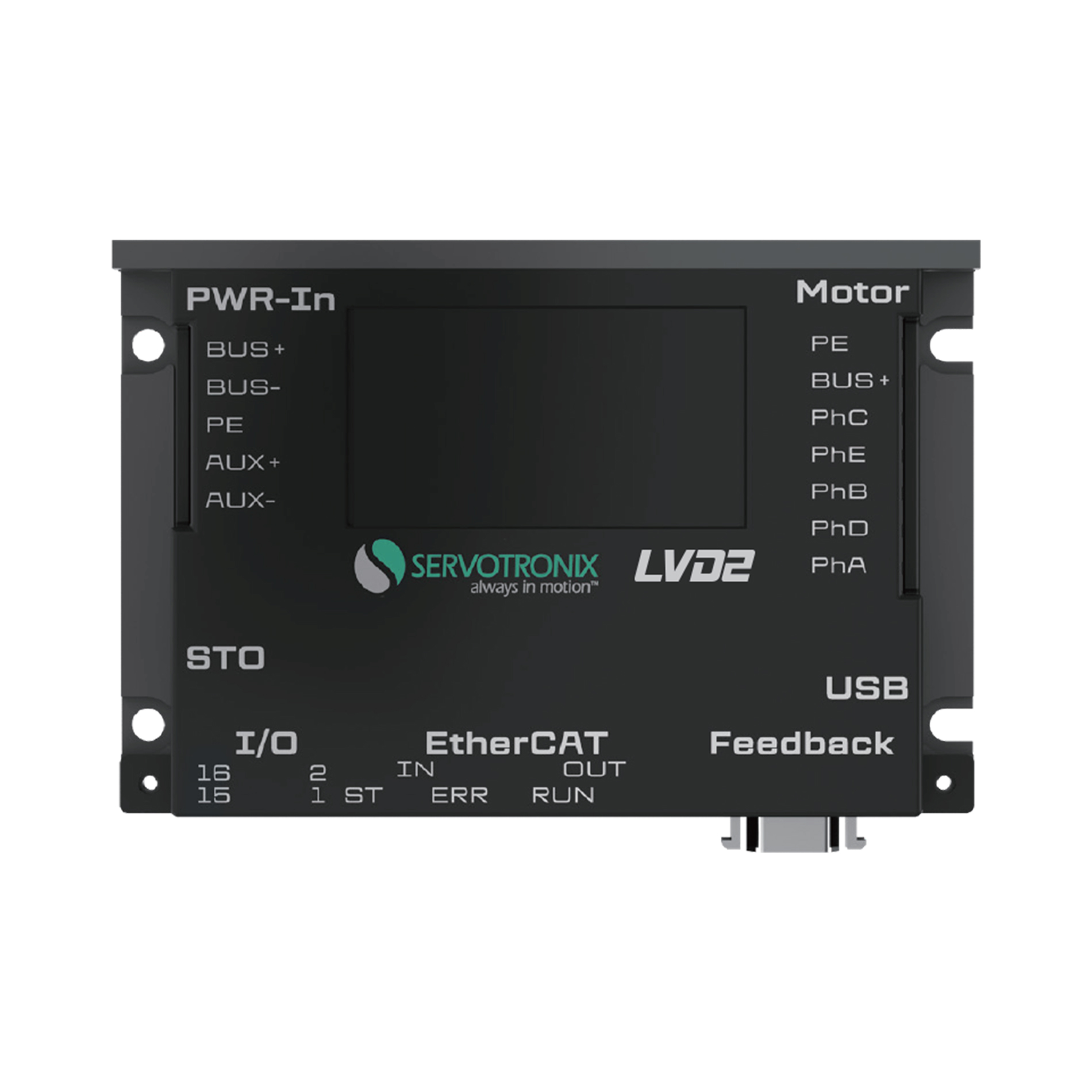
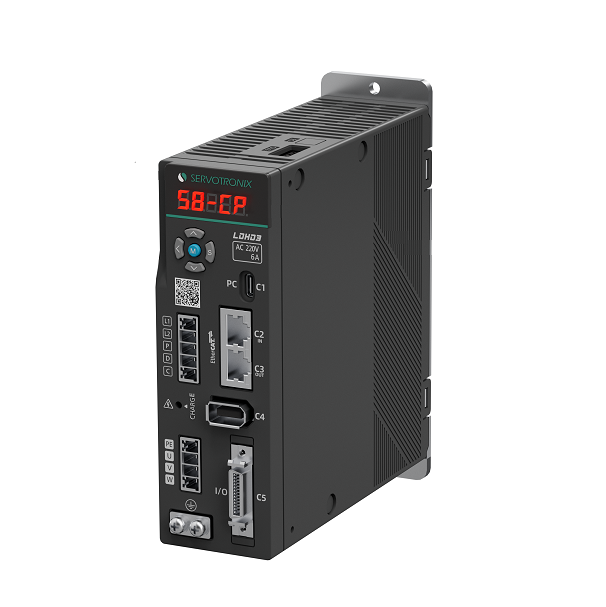
The core structure of a permanent magnet synchronous servo motor mainly consists of four parts: stator, rotor, encoder, and drive controller. The stator adopts a three-phase symmetrical winding structure, which generates a rotating magnetic field when an alternating current is applied; The rotor is embedded with high-performance rare earth permanent magnets (such as neodymium iron boron), which do not require additional excitation and rotate synchronously under the action of the stator rotating magnetic field; As the core feedback component, the encoder can collect real-time position and speed signals of the rotor, feed them back to the drive controller, form a closed-loop control, and ensure the accuracy of motor operation; The drive controller uses vector control algorithm to accurately adjust the amplitude and phase of the stator current, achieving precise control of the motor position, speed, and torque in a three closed loop.
Compared to traditional servo motors, permanent magnet synchronous servo motors have three core technological advantages. One is high-precision control, coupled with a high-precision encoder (with a resolution of up to 23 bits), which can achieve nanometer level positioning accuracy and millisecond level dynamic response, with an acceleration fluctuation standard deviation of only ± 0.8%, suitable for scenarios with strict positioning accuracy requirements; The second is high power density. Under the same volume, its power output is 1.5-2 times that of traditional asynchronous motors, which can achieve miniaturization and lightweight design of equipment, saving installation space; The third is high efficiency and energy saving, with no excitation loss and rotor copper loss. The no-load loss is extremely low, and long-term operation can significantly reduce energy consumption, which is in line with the current development concept of green manufacturing. In addition, the motor also has the characteristics of smooth operation, low noise, and long service life, with maintenance costs much lower than traditional motors.
The application scenarios of permanent magnet synchronous servo motors are extremely wide, covering multiple high value-added fields such as industry, new energy, aerospace, etc. In the field of industrial automation, it is the core power component of industrial robots, precision CNC machine tools, and automated production lines. For example, the robot joint module relies on it to achieve high-precision and high dynamic response action execution, with a positioning accuracy of ± 0.001mm. In the field of new energy, it is widely used in the drive system of new energy vehicles, wind turbines, and photovoltaic tracking systems. For example, the drive motor of new energy vehicles can achieve efficient power output and improve vehicle range; In the field of high-end equipment, aerospace equipment, medical imaging equipment, and semiconductor manufacturing equipment all rely on the precise driving of permanent magnet synchronous servo motors, such as semiconductor wafer cutting equipment that relies on them to achieve nanoscale motion control.
Looking ahead to the future, with the continuous upgrading of rare earth permanent magnet material technology, power electronics technology, and control algorithms, permanent magnet synchronous servo motors will develop towards higher precision, higher efficiency, miniaturization, and intelligence. On the one hand, the research and development of new permanent magnet materials will further enhance the power density and magnetic field stability of motors, reducing dependence on rare earth resources; On the other hand, the penetration of wide bandgap power devices such as silicon carbide (SiC) and gallium nitride (GaN) will drive the efficiency of motors to over 95.8%, while combining AI intelligent control and digital twin technology to achieve intelligent monitoring, fault diagnosis, and adaptive adjustment of motors, further expanding their application scenarios. It is expected that by 2030, the proportion of permanent magnet synchronous servo motors in the high-end servo market will continue to increase, becoming the core power support for intelligent manufacturing.